
Medically Reviewed by Esteem Dental And Orthodontic Team on April 15, 2025
Most people brush twice a day and still develop problems between their teeth, and the reason is straightforward: a toothbrush cannot reach the spaces between teeth at all. Those interdental spaces are where plaque accumulates undisturbed, where gum disease typically begins, and where cavities between teeth form. Adding an interdental cleaning tool to your daily routine closes a gap that brushing alone simply cannot address.
At Esteem Dental, Dr. Jordan Jones and our team see patients who brush diligently and still develop problems in those tight interdental spaces. Our multi-specialty practice in Lake Nona and Winter Garden emphasizes comprehensive preventive dental care that protects the entire mouth, and interdental cleaning is one of the most practical things patients can add to their daily routine. We help each patient identify the right tool and technique for their specific anatomy.
What Is an Interdental Brush?
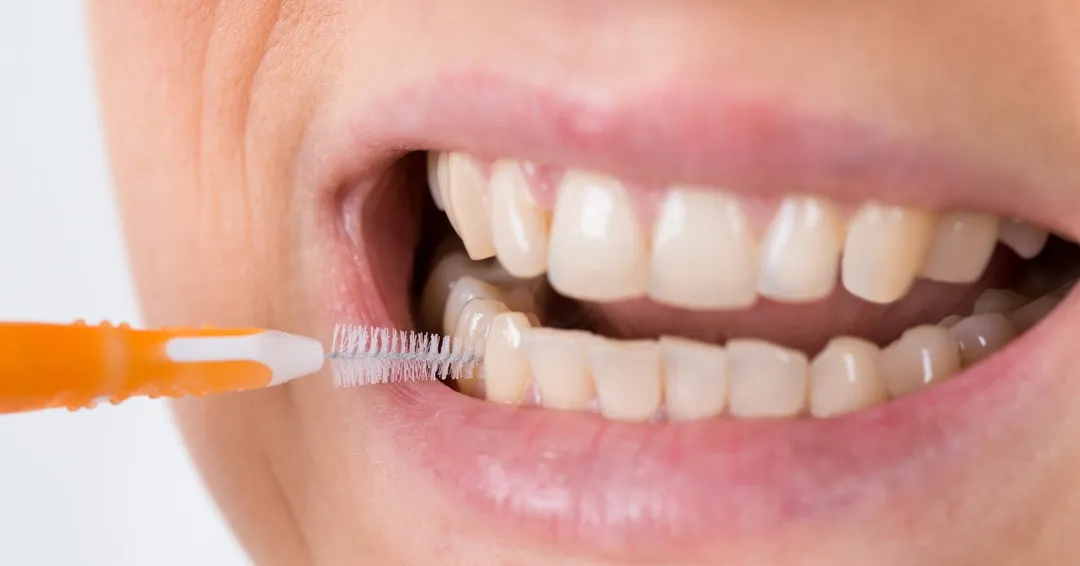
An interdental brush is a small, narrow brush designed specifically to clean between teeth where a toothbrush cannot reach. The brush has nylon bristles attached to a thin wire core and fits into the spaces between adjacent teeth. It comes in multiple sizes to match the varying gap widths throughout a mouth, and most handles are compact enough to carry easily.
| Feature | Detail |
|---|---|
| Purpose | Removes plaque and food particles from between teeth |
| Sizes | 0.4mm to 1.5mm+ to match different gap widths |
| Best For | Braces, implants, bridges, wider gaps, limited dexterity |
| Frequency | Once daily, preferably in the evening |
Interdental Brush Sizes and Materials
Interdental brushes range in diameter from roughly 0.4mm on the smallest end to 1.5mm or more for wider gaps. Most mouths require more than one size because the spaces between different pairs of teeth vary. The wire core runs through the center and is typically coated in plastic to protect dental restorations and sensitive gum tissue. Bristles extend outward from the wire and dislodge plaque through a gentle back-and-forth motion rather than a scraping action.
Choosing the right size matters. A brush that is too small will not contact the tooth surfaces on either side of the gap, while one that is too large can press against the gum and cause irritation. The correct fit is one that passes through the gap with gentle resistance. Your dentist or hygienist can help you identify the right size range for different areas of your mouth during your next visit.
How Interdental Brushes Compare to Floss
Both interdental brushes and traditional floss reduce plaque and lower the risk of gum disease, and both are far better than skipping interdental cleaning entirely. The differences come down to anatomy, dexterity, and personal consistency.
A 2006 clinical study published in PubMed found that interdental brushes removed more plaque and produced larger reductions in probing depth than dental floss, particularly in patients with moderate to severe periodontitis, and that patients found brushes easier and more effective to use. For people with certain conditions, interdental brushes offer clear advantages:
- Patients with orthodontic braces can navigate around brackets and wires without the threading required by floss
- Those with dental implants can clean around restoration components without risking floss fraying on abutments
- People with limited dexterity from arthritis or other conditions find the handle easier to grip and control
- Individuals with wider interdental spaces achieve more thorough coverage with a brush than with floss
Floss still has an advantage in one specific situation: very tight contacts between teeth where a brush simply cannot fit without forcing. For those spaces, waxed floss or a floss threader remains the better option.
How Water Flossers Compare
Water flossers, also called oral irrigators, use a pressurized stream of water to flush debris and bacteria from between teeth and below the gumline. They are particularly helpful for patients with implants, crowns, or bridges where cleaning under the restoration is difficult with conventional tools. Research shows water flossers reduce gingivitis and bleeding effectively, though they are generally considered a supplement to rather than a replacement for physical plaque removal. For most patients, interdental brushes or floss still outperform water flossers at dislodging the sticky biofilm that attaches firmly to tooth surfaces. The most thorough approach combines a water flosser with interdental brushing or flossing rather than choosing one over the other.
How to Use Interdental Brushes Properly
Start with clean, dry hands and a brush in the right size for the space you are cleaning. Gently insert the brush between your teeth at the gumline, being careful not to force it into spaces where it does not fit comfortably. Move the brush back and forth several times with light pressure, then remove and rinse it before moving to the next space. Work your way around the entire mouth, and use different size brushes as needed for different areas.
Replace the brush every one to two weeks, or sooner if the bristles show signs of bending or wear. For the first few days of regular use, some light bleeding from the gumline is common as gum tissue adjusts to the new cleaning pressure. That bleeding typically resolves within a week or two as gum health improves. Bleeding that persists longer is worth mentioning to your dentist, as it may indicate existing gum inflammation that needs professional attention.
The Oral Health Benefits of Regular Interdental Cleaning
The spaces between teeth are where bacteria accumulate most easily because they are protected from the mechanical action of a toothbrush. Plaque left undisturbed in those spaces matures into the kind of bacterial community that causes gum irritation, bone loss, and cavities on the sides of teeth. Daily interdental cleaning disrupts that process before it gains traction.
Consistent interdental hygiene substantially reduces the risk of gingivitis and periodontitis, both of which begin in the interdental areas. Beyond direct oral health benefits, research increasingly links chronic oral bacteria to systemic conditions including cardiovascular disease and metabolic complications. Keeping interdental spaces clean reduces the bacterial load that can enter the bloodstream from inflamed gum tissue, which is one more reason to treat interdental cleaning as essential rather than optional.
Preventive Dental Care at Esteem Dental
At Esteem Dental, we take time during every visit to evaluate each patient’s interdental health and make specific tool and technique recommendations based on what we actually see. Whether you have braces, implants, bridgework, or simply tight or widely spaced teeth, we can show you the right approach and the right sizes for your mouth. Our goal is to give patients the knowledge to protect their teeth at home between professional cleanings.
To learn more about interdental cleaning and other preventive care strategies, or to schedule your next visit, reach out through our contact form and our team will get you set up.

Dr. Jordan Jones, DDS
Dr. Jordan Jones leads the experienced team at Esteem Dental, providing comprehensive family dental care to the Winter Garden and Lake Nona communities. With a focus on general dentistry, pediatric care, and orthodontics, Dr. Jones combines advanced techniques with a compassionate approach to ensure every patient receives personalized, quality treatment in a comfortable environment.
✓ Medically Reviewed
