
Medically Reviewed by Esteem Dental And Orthodontic Team on August 9, 2024
A dental bridge replaces one or more missing teeth by anchoring a false tooth, or pontic, to the natural teeth or implants on either side of the gap. Choosing the right type depends on which teeth are missing, the health of your remaining teeth, and how much support your bite needs.
Dental bridges are a versatile solution in restorative dentistry, designed to replace one or more missing teeth while filling the gap between existing teeth. They play a crucial role in maintaining the structure and function of your mouth, helping you chew properly and speak clearly. Esteem Dental is committed to providing compassionate, comfortable orthodontic and dental care to help you achieve a healthy, confident smile, and our team can walk you through every option during a consultation.
What Are the Different Types of Dental Bridges?
A few different options are available for bridges, and each has different uses and benefits depending on your dental history and the location of the gap. The main types of dental bridges include the following:
- Traditional dental bridges: crowns on both sides of the gap support a pontic in between.
- Maryland bonded bridges: metal or ceramic wings bond to the back of neighboring teeth instead of full crowns.
- Removable dental bridges: a partial denture-style bridge you can take in and out yourself.
- Cantilever dental bridges: supported by a crown on only one side of the gap.
- Implant-supported bridges: anchored to dental implants rather than natural teeth.
Before deciding, we encourage you to speak with your dentist about your preferences, medical history, and additional options such as dental implants as a standalone alternative.
Who Is a Suitable Candidate for Different Dental Bridges?
Which bridge you and your dentist decide to use will vary based on several factors, including your lifestyle, jawbone health, and medical history. Here is a closer look at the various kinds of dental bridges and who tends to be the best fit for each.
Traditional Dental Bridges
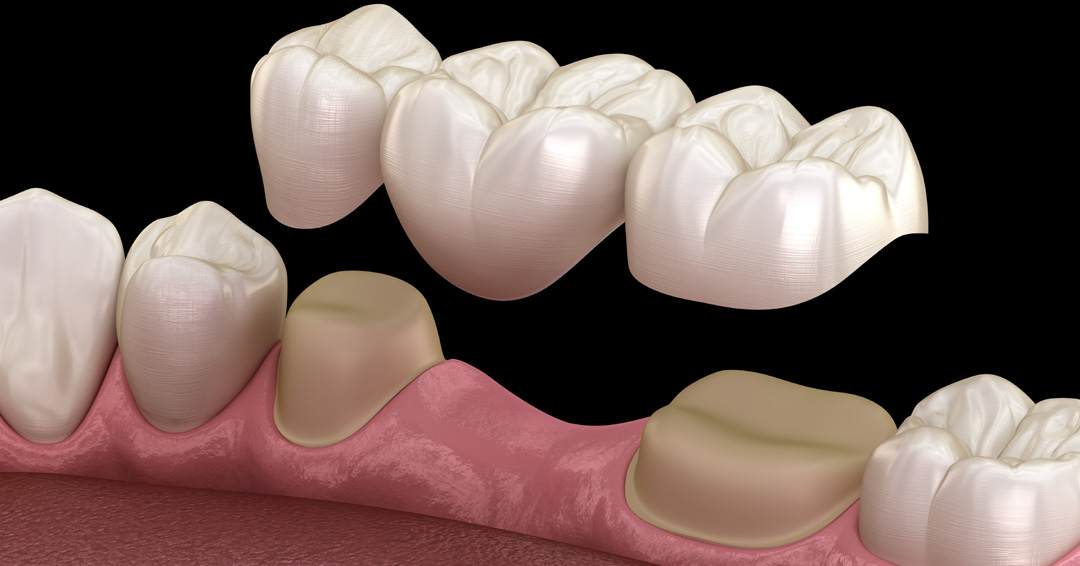
These are the most common type of dental bridge, generally consisting of two crowns on either side of a missing tooth, with the gap filled in by a pontic. The two crowns are bonded to your natural teeth, which may need to be reshaped to accommodate them. The crowns provide additional stability and can improve functionality in your bite.
Traditional dental bridges are an excellent option for those with healthy, strong teeth on either side of a missing tooth.
Maryland Bonded Bridges
Maryland bonded bridges use metal or ceramic wings to secure the pontic instead of full crowns. The wings are bonded to the backs of neighboring teeth. While this option is less stable than a traditional bridge, it can still support normal chewing in the front of the mouth without altering healthy tooth structure as much.
Maryland bonded bridges tend to work well for replacing a missing front tooth. These bridges are generally not recommended for back teeth, which bear more chewing force.
Removable Dental Bridges
Many dental bridges are permanently bonded to the teeth by a dentist, but removable bridges can be taken out and placed back into the mouth by the patient. Removable bridges are typically less stable than other options, which means eating certain foods while wearing one may be more difficult.
Removable dental bridges may be easier to clean than other bridge options, which can lower the risk of plaque buildup, gum disease, or other dental issues. This option is also generally less expensive than bonded or permanent bridges, which makes it a reasonable choice for patients weighing cost alongside convenience.
Cantilever Dental Bridges
Like traditional dental bridges, cantilever bridges are supported by a crown. However, they only attach on one end, with the pontic hanging over and filling in the gap. Due to their single point of support, cantilever bridges are generally less strong than other options and are best suited to lower-pressure areas of the mouth.
Cantilever bridges may be useful for patients who have only one healthy, natural tooth adjacent to a missing tooth gap.
Implant-Supported Bridges
Like a traditional bridge, an implant-supported dental bridge supports a missing tooth on both sides. However, instead of relying on a dental crown for support, implants are placed into the jawbone. The healing process may take more time than other options, typically three to six months, since the implant needs to fuse with the bone.
Patients may prefer implant-supported bridges if they have three or more teeth missing in a row. Implant-supported dental bridges also tend to be steady and strong, which can improve functionality in a patient’s bite while helping preserve the jawbone underneath.
How Long Do Dental Bridges Last?
According to the American Dental Association’s MouthHealthy resource, a bridge, sometimes called a fixed partial denture, replaces missing teeth with artificial teeth that bridge the gap where natural teeth used to be, and can be made from gold, alloys, porcelain, or a combination of these materials. With good oral hygiene and regular dental visits, a well-made bridge may last a decade or longer, though the supporting teeth still need to be brushed and flossed carefully since decay or gum disease around the anchor teeth can shorten a bridge’s lifespan.
Bridges are one of several ways to address missing teeth. If you are also weighing a single missing tooth rather than several in a row, our page on how dental implants can restore your smile compares the implant route directly, and our overview of dental crowns versus veneers is worth a look if the tooth in question is damaged rather than missing.
What to Expect at Your Dental Bridge Consultation
During a consultation, we examine the gap, the health of neighboring teeth, and the surrounding bone to help determine which type of bridge fits your situation. If you are missing several teeth or considering a longer-term solution, we may also discuss what a full mouth restoration involves as a broader option. This conversation is also a good time to review your insurance coverage, expected timeline, and any temporary restoration you may wear while a permanent bridge is being made.
Looking for a Dental Bridge That’s Right for You? Choose Esteem Dental for Your Dental Bridge Needs
At Esteem Dental, we offer a wide range of dental bridge options to suit your unique needs. Our team of skilled professionals is here to provide compassionate and comprehensive care. We understand that every patient is different, and we take the time to discuss all your options, helping you make an informed decision that best suits your lifestyle and medical history.
With our commitment to a comfortable and positive experience, Esteem Dental stands out as a trusted choice for dental care. Our team is dedicated to restoring your smile and supporting your oral health with modern dental technology and techniques. To learn more about how we can help you achieve a healthy, confident smile, visit our contact form. We look forward to serving you.
Frequently Asked Questions About Dental Bridges
How long does getting a dental bridge take?
A traditional or Maryland bridge is usually completed over two visits spaced a few weeks apart, while an implant-supported bridge can take several months since the implant needs time to fuse with the jawbone before the final bridge is attached.
Is a dental bridge or a dental implant a better choice for a missing tooth?
A bridge relies on neighboring teeth for support, while an implant stands on its own and does not require reshaping adjacent teeth. Bridges may be a better fit when the teeth on either side already need crowns or when a patient prefers to avoid a surgical procedure, while implants may better preserve jawbone density over time.
Does getting a dental bridge hurt?
Preparing the supporting teeth for a bridge is done with local anesthesia, so you should not feel pain during the procedure. Mild sensitivity around the prepared teeth is common for a few days afterward and typically resolves on its own.
How do I clean a dental bridge?
Fixed bridges need daily brushing along the gumline and a floss threader or water flosser to clean underneath the pontic, since regular floss cannot pass through a bonded bridge on its own. Removable bridges can be taken out and cleaned with a soft brush and non-abrasive cleanser.
Will my dental insurance cover a bridge?
Many dental insurance plans provide partial coverage for bridges, though the amount can depend on your specific plan and whether the bridge is considered medically necessary. Our team can help you review your benefits and discuss payment options before treatment begins.
Last updated September 11, 2026.

Dr. Jordan Jones, DDS
Dr. Jordan Jones leads the experienced team at Esteem Dental, providing comprehensive family dental care to the Winter Garden and Lake Nona communities. With a focus on general dentistry, pediatric care, and orthodontics, Dr. Jones combines advanced techniques with a compassionate approach to ensure every patient receives personalized, quality treatment in a comfortable environment.
✓ Medically Reviewed
