
Medically Reviewed by Esteem Dental And Orthodontic Team on November 6, 2025
When you visit your dentist, one of the most common procedures you’ll encounter is having dental X-rays taken. While some patients may feel hesitant about this imaging technology, understanding what dental X-rays are and why they’re essential can help ease any concerns and highlight their vital role in maintaining optimal oral health.
At Esteem Dental, we use state-of-the-art digital X-ray technology to provide our patients in Lake Nona and Winter Garden with the most comprehensive dental care possible. We believe that informed patients make the best decisions about their oral health. Our team is committed to educating every patient on every aspect of dental treatment.
Understanding Dental X-Rays
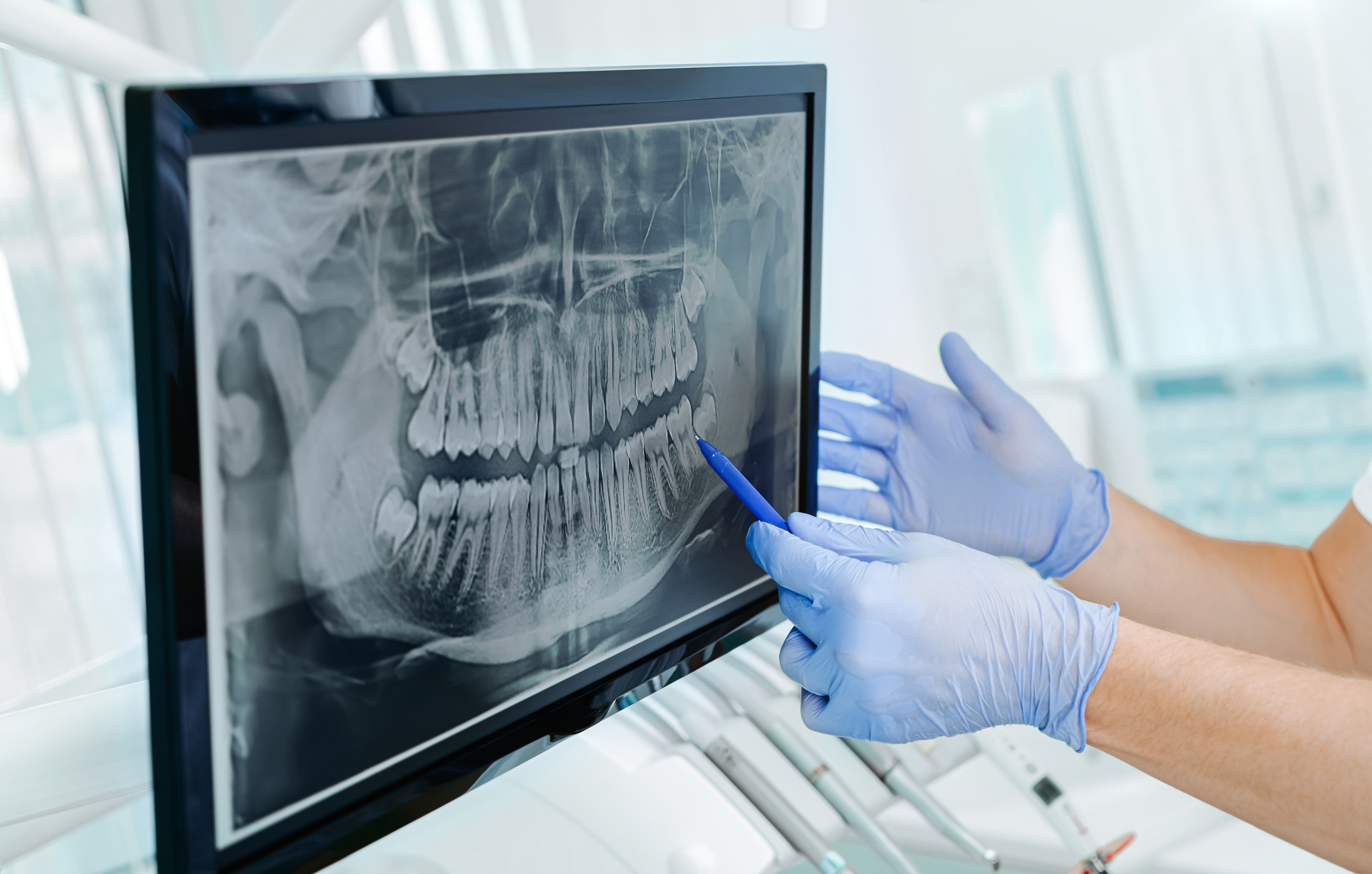
Dental X-rays are diagnostic images that allow dentists to see beyond what’s visible during a regular oral examination. These images capture detailed views of your teeth, bones, and surrounding soft tissues, revealing problems that might otherwise go undetected until they become more serious and costly to treat.
Our dental offices use digital X-ray technology, which produces clearer images with significantly less radiation exposure compared to traditional film X-rays. The digital format also allows for immediate viewing and easy storage of your dental records, making your treatment more efficient and environmentally friendly.
There are several types of dental X-rays, each serving a specific diagnostic purpose. Bitewing X-rays reveal the upper and lower teeth in an area of your mouth and are excellent for detecting cavities between teeth. Periapical X-rays capture the entire tooth from crown to root and are useful for identifying problems with the tooth’s root or surrounding bone. Panoramic X-rays provide a broad view of your whole mouth, including all teeth, jaws, and surrounding structures.
Why Dental X-Rays Are Essential for Your Oral Health
The primary reason dental X-rays are necessary is their ability to detect problems that cannot be seen during a visual examination alone. Plaque constantly forms on teeth, and when you eat or drink anything with sugar, the bacteria present in plaque create acids that attack your enamel and can form cavities over time. Many cavities develop between teeth or beneath existing fillings, areas that are impossible to examine thoroughly without X-ray technology.
Beyond cavity detection, dental X-rays help identify a wide range of oral health issues. They can reveal bone loss associated with gum disease, detect infections at the root of teeth, identify impacted teeth, and spot developmental abnormalities in children. For patients considering orthodontic treatment, X-rays provide crucial information about tooth positioning and jaw alignment.
Early detection through dental X-rays often means less invasive and more affordable treatment options. A small cavity caught on an X-ray might only require a simple filling, while the same cavity left undetected could eventually need a crown or root canal treatment. This preventive approach aligns perfectly with modern dentistry’s focus on maintaining oral health rather than simply treating problems after they occur.
Safety and Frequency of Dental X-Rays
Modern digital X-ray technology significantly minimizes radiation exposure, addressing patient concerns about its levels in dental X-rays. To put this in perspective, a full mouth series of dental X-rays exposes you to about the same amount of radiation you’d receive during a short airplane flight or from natural background radiation over a few days.
How often you need dental X-rays is determined by your individual oral health requirements and risk factors. Patients with good oral health and no history of dental problems might only need X-rays every 12 to 24 months. However, those with active decay, gum disease, or other ongoing issues may require more frequent imaging to monitor treatment progress and detect new problems early.
To minimize radiation exposure, your dentist will always adhere to the ALARA principle: “As Low As Reasonably Achievable.” This means taking only the X-rays necessary for proper diagnosis and treatment planning. Pregnant women should inform their dentist about their condition, as X-rays are typically postponed unless there’s a dental emergency requiring immediate diagnosis.
The benefits so far outweigh the minimal risks associated with radiation exposure. The ability to detect and treat dental issues early prevents more extensive procedures and preserves your natural teeth for years to come.
Experience Quality Dental Care at Esteem Dental
At Esteem Dental, we’re committed to providing exceptional family dental care using the most innovative technology and techniques. Our state-of-the-art digital X-ray systems ensure accurate diagnoses while maintaining your comfort and safety. Dr. Jordan Jones and our experienced team take the time to explain your X-ray results and answer any questions you may have about your oral health.
Whether you’re bringing your child for their first dental visit or seeking comprehensive adult dental care, we create a welcoming atmosphere where every family member feels comfortable and confident in their treatment. Don’t wait for dental problems to become painful or expensive to treat – schedule your appointment today through our convenient contact form.

Dr. Jordan Jones, DDS
Dr. Jordan Jones leads the experienced team at Esteem Dental, providing comprehensive family dental care to the Winter Garden and Lake Nona communities. With a focus on general dentistry, pediatric care, and orthodontics, Dr. Jones combines advanced techniques with a compassionate approach to ensure every patient receives personalized, quality treatment in a comfortable environment.
✓ Medically Reviewed
