
Medically Reviewed by Esteem Dental And Orthodontic Team on March 9, 2026
Jaw pain has a way of making itself known at the worst moments — while chewing, talking, or even first thing in the morning before you have done anything at all. It can feel like a dull ache, a sharp click, or a persistent stiffness that never quite goes away. What makes it frustrating is that jaw pain rarely comes with an obvious explanation, and several different conditions can produce symptoms that feel nearly identical.
At Esteem Dental, our team in Winter Garden and Lake Nona sees patients who come in with jaw discomfort and are not sure where to start. As a multi-specialty family practice, we are equipped to evaluate jaw pain from multiple angles and help you understand what is actually going on — and what to do about it.
What TMJ Actually Means
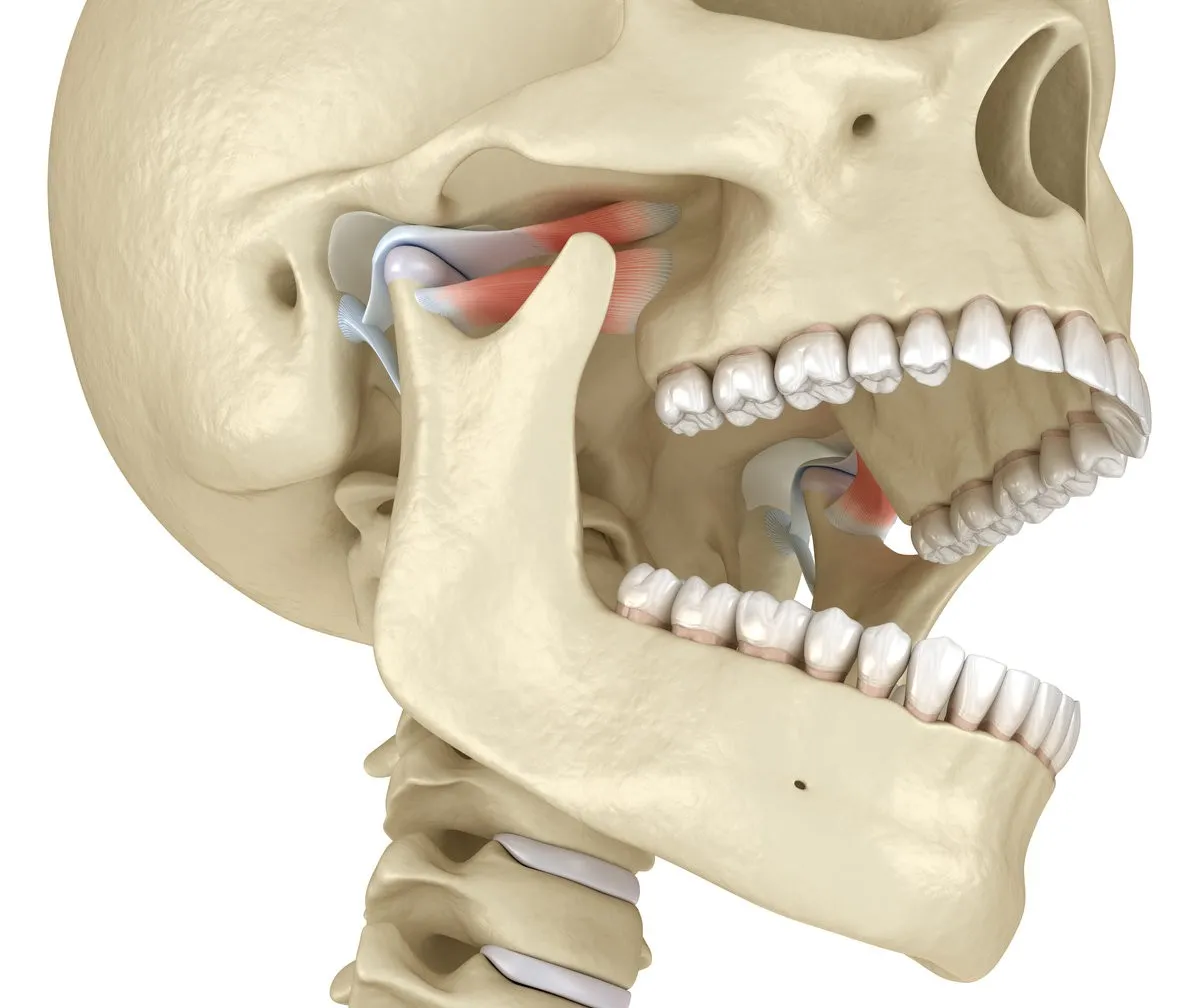
The term “TMJ” is commonly used to describe jaw pain, but it technically refers only to the temporomandibular joint itself — the hinge that connects your jawbone to your skull on each side of your face. The conditions that cause pain and dysfunction in that joint and the surrounding muscles are more precisely called temporomandibular disorders, or TMDs.
According to the National Institute of Dental and Craniofacial Research, TMDs are actually a group of more than 30 conditions that affect the jaw joint, chewing muscles, and nearby tissues. They are twice as common in women as in men, and a recent study found that approximately 11 to 12 million adults in the United States have pain in the region of the temporomandibular joint. So if your jaw hurts, you are far from alone — but that does not mean every case of jaw pain is a TMD.
Common Symptoms That Point Toward a TMD
Certain patterns of jaw pain are more likely to suggest a temporomandibular disorder than other causes. The most common symptom is pain in the chewing muscles or jaw joint, but TMDs can also produce a wider range of sensations. Signs that your jaw pain may be related to a TMD include jaw stiffness or limited range of motion when opening your mouth, pain that radiates into the face or neck, painful clicking or popping when opening and closing the jaw, a feeling that your upper and lower teeth no longer fit together the way they used to, and ringing in the ears or dizziness.
It is worth noting that clicking or popping sounds on their own — without any accompanying pain — are considered common and normal. They do not require treatment unless discomfort is present as well.
Other Conditions That Can Mimic TMJ Pain
Not every case of jaw pain is a TMD, and getting the right answer matters because the treatment approach can differ significantly. Several other conditions are known to produce pain in or around the jaw that can be easily confused with a temporomandibular disorder.
Tooth-Related Issues
A cracked tooth, a deep cavity, or an abscessed tooth can all produce pain that radiates into the jaw and face. Because the nerves in your teeth share pathways with the muscles and joint structures nearby, dental pain can feel broader and more diffuse than you might expect. A dental exam is often the fastest way to rule this out.
Bruxism
Nighttime teeth grinding — a condition called bruxism — is closely related to TMDs and can sometimes occur alongside them, but it is its own separate issue. The repeated clenching and grinding puts significant pressure on the jaw muscles and joints, leading to morning soreness, headaches, and worn tooth enamel. Many people with bruxism are not aware they grind their teeth until a dentist points out the signs.
Sinus Pressure and Infection
Sinus infections and congestion can create pressure that radiates into the upper jaw and cheekbones. This type of pain tends to worsen with head position changes, comes with nasal symptoms, and may feel more like a pressure sensation than a joint or muscle ache.
Earaches and Ear Infections
Because the temporomandibular joint sits directly in front of the ear canal, ear pain and jaw pain are often difficult to distinguish. An ear infection, earwax buildup, or other ear-related condition can feel remarkably similar to a TMD and may need to be evaluated by a physician in addition to a dentist.
Nerve Pain
Trigeminal neuralgia is a nerve condition that causes sudden, intense facial pain — sometimes described as electric shock-like — that can be triggered by chewing, speaking, or touching the face. It is distinct from TMD but can overlap in the areas where it causes discomfort.
How a Diagnosis Is Made
There is no single definitive test for TMDs, which is part of what makes diagnosis challenging. A thorough evaluation typically involves a physical exam of the jaw, a review of your symptoms and health history, and in some cases, imaging such as X-rays or other scans to assess the joint and surrounding structures. Your provider will also consider whether other conditions — dental, sinus-related, or neurological — may be contributing to your symptoms.
Because TMDs can occur alongside other chronic conditions such as headaches, sleep problems, and fibromyalgia, a complete picture of your health is important for building an effective treatment plan.
When to Stop Waiting and See Someone
Some TMD symptoms resolve on their own with rest and conservative self-care. However, jaw pain that has lasted more than a few weeks, significantly limits your ability to open your mouth, wakes you up at night, or comes with noticeable changes in your bite warrants a professional evaluation. Early attention tends to lead to simpler, more effective treatment.
Esteem Dental Can Help You Find Answers
Jaw pain is not something you should try to diagnose on your own, and it is not something you should simply push through. At Esteem Dental, our team has the tools and the training to evaluate jaw pain thoroughly, identify its source, and discuss the right next steps — whether that means managing TMJ symptoms with conservative approaches, addressing an underlying dental issue, or coordinating care with another provider.
We treat patients of all ages at our Winter Garden and Lake Nona locations and take a thoughtful, whole-health approach to every concern that walks through our door. To schedule an evaluation, please reach out through our contact form today.

Dr. Jordan Jones, DDS
Dr. Jordan Jones leads the experienced team at Esteem Dental, providing comprehensive family dental care to the Winter Garden and Lake Nona communities. With a focus on general dentistry, pediatric care, and orthodontics, Dr. Jones combines advanced techniques with a compassionate approach to ensure every patient receives personalized, quality treatment in a comfortable environment.
✓ Medically Reviewed
