
Medically Reviewed by Esteem Dental And Orthodontic Team on March 9, 2026
Having a dental crown or bridge does not automatically rule out Invisalign, and clear aligners succeed alongside existing restorations in most mild to moderate cases. Crowns and bridges each interact with treatment a bit differently, though, so understanding those nuances before your consultation helps set the right expectations.
At Esteem Dental, our team sees adult patients with all kinds of dental histories, including crowns, bridges, and other restorations. As a multi-specialty practice in Winter Garden and Lake Nona, we evaluate your full picture and build a treatment plan that works with what you already have rather than around it.
What Happens When Invisalign Meets a Dental Crown
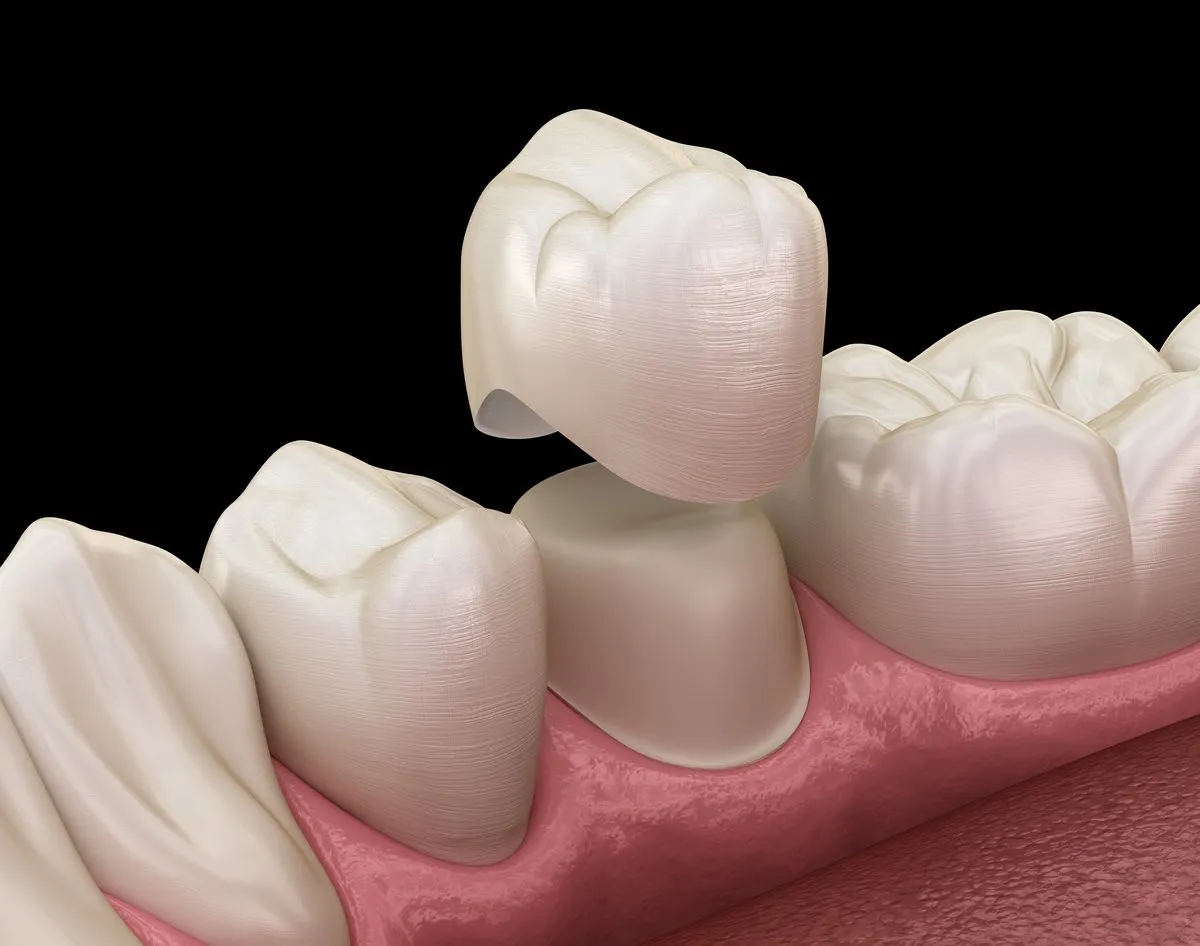
A crown caps a damaged or weakened tooth to restore its shape, strength, and appearance, and the root underneath still responds to orthodontic force the same way a natural tooth would. Because aligners are removable trays rather than brackets bonded directly to each tooth, there is no risk of an aligner pulling a crown loose during treatment.
What matters more than the crown itself is its condition. A crown that is loose, poorly fitted, or structurally compromised should be addressed before starting Invisalign, while a stable, well-bonded crown is generally not a barrier at all.
What About Attachments?
Many Invisalign plans use small tooth-colored attachments bonded to certain teeth so the aligner can grip and move them more precisely. These attachments do not always bond as reliably to a crown’s surface material as they do to natural enamel, so your provider may place attachments on adjacent natural teeth instead or design pressure points into the aligner itself to achieve the needed movement without relying on the crowned tooth.
How Bridges Affect Invisalign Treatment
Bridges introduce a more meaningful limitation. A bridge replaces a missing tooth by anchoring an artificial tooth to the natural teeth on either side, effectively fusing those teeth into a single connected unit that cannot move independently. That means Invisalign cannot reposition a bridge or its anchor teeth as separate pieces the way it can with individual natural teeth.
That does not take Invisalign off the table entirely. A treatment plan can still move the rest of your teeth while working around the bridge, producing meaningful improvement in overall alignment even though that one section stays fixed. According to the CDC’s 2024 Oral Health Surveillance Report, tooth loss and restoration needs are common across adult age groups, so treatment planning around an existing bridge is a routine part of adult orthodontic care rather than an unusual complication.
Timing: Crowns, Bridges, and Treatment Sequencing
Getting the order of operations right protects both your restoration and your orthodontic result. If you need a crown for structural reasons, such as decay or a cracked tooth, it generally makes sense to place it before starting Invisalign so the restoration is stable for the full course of treatment. If a crown is purely cosmetic, completing Invisalign first and placing the crown on a tooth already in its final position often gives a better fit and appearance.
If a bridge is somewhere in your future, completing orthodontic treatment beforehand lets your teeth move freely and creates proper spacing for the bridge to fit well once it is placed. A comprehensive consultation before committing to either treatment is what makes this sequencing possible.
What to Expect at Your Consultation
The only reliable way to know whether Invisalign will work with your specific restorations is a thorough evaluation. Your provider takes X-rays or a 3D digital scan, assesses the condition of any crowns or bridge work, reviews how much movement is needed and where, and builds a plan around that picture. In some cases a fully aligned smile is achievable with aligners alone; in others, traditional braces or a combination approach is the better path, and a candid conversation about which fits your case is part of the process.
Start Your Invisalign Conversation at Esteem Dental
Prior dental work should not stop you from pursuing straighter teeth. We take an individualized approach to every consultation, reviewing your full dental history and restorations before recommending next steps, so whether Invisalign or another option fits your case best, you get clear, honest guidance either way. To schedule a consultation, reach out through our contact form today.
Frequently Asked Questions About Invisalign With Crowns and Bridges
Can Invisalign move a tooth that has a crown on it?
In most cases, yes. The natural root and supporting tissue beneath a crown still respond to orthodontic force, so a stable, well-bonded crown is generally not a barrier to movement.
Can Invisalign move teeth connected by a bridge?
No, the teeth anchoring a bridge are fused into one unit and cannot move independently. A treatment plan can still move the rest of your teeth around the bridge, but that section stays fixed.
Should I get my crown placed before or after Invisalign?
If the crown is needed for a structural reason like decay or a crack, place it first so the restoration stays stable through treatment. If it is purely cosmetic, completing Invisalign first often lets the crown be placed on a tooth already in its final position.
Do Invisalign attachments work differently on a crowned tooth?
Attachments do not always bond as reliably to a crown’s surface as they do to natural enamel. Your provider can place attachments on nearby natural teeth or build alternate pressure points into the aligner to make up for it.
Is it better to get a bridge before or after Invisalign?
Generally after, since completing orthodontic treatment first lets your teeth settle into their final positions and creates proper spacing for the bridge to fit correctly once it is placed.

Dr. Jordan Jones, DDS
Dr. Jordan Jones leads the experienced team at Esteem Dental, providing comprehensive family dental care to the Winter Garden and Lake Nona communities. With a focus on general dentistry, pediatric care, and orthodontics, Dr. Jones combines advanced techniques with a compassionate approach to ensure every patient receives personalized, quality treatment in a comfortable environment.
✓ Medically Reviewed
